Summer Blog

At the beginning of summer my old friends from New Hampshire visited their daughter in Portland and by extension me, a few miles to the north. On the second day of the season the three of us went to Astoria for a day trip. Though he selected to drive significantly out of the way we still could easily drive there in back. We hadd a nice time on a sunny and cool day. We took a long walk along the river and had some nice seafood at the Astoria Brewing Company.
Every year we see a few summer days with temperatures reaching the low 100s. This year we had five such days but the weekend of June 26-28 we reached numbers that this region has never hit and ones that I never experienced anywhere. Each of these three days was hotter than the one preceding it with the thermometer reaching highs I thought only occurred in the Sahara Desert. It peaked at 117 degrees on June 28.

Apparently we were under a “Heat Dome”, a term I had never heard of before. The idea is pretty intuitive but the definition of it I gleaned from NOAA's web site which told me that a heat dome occurs when the atmosphere traps hot ocean air like a lid or cap. ... In a process known as convection, the gradient causes more warm air, heated by the ocean surface, to rise over the western Pacific, and decreases convection over the central and eastern Pacific. Around 2013 we had a similar condition on the east coast, when a “Derecho” killed our electricity for four and a half days. The difference back then was that it produced a powerful storm. In 2021 on the west coast there was no storm and perhaps that is why we had no electrical outage.

Heat Dome
I didn't travel much during the summer but I never really do anyway, mainly for the high cost of summer (tourist) season. Typically I would have flown to Michigan but for the second year in a row, the pandemic has prevented me from that trip. However I do hope to do some traveling including Michigan in October.
So I stayed pretty local. Of course my New Hampshire friends were here for several weeks so there were several visits with them. I did go to (or attempted to go) to several fairly local venues for entertainment in July.
The first was the Hockinson Blueberry Festival. Real life festivals in small towns never match those seen on television shows like the Gilmore Girls or the early years of The Midsomer Murders to name a few. In those shows there was a local festival in nearly every episode. Well we have them nearly as often here and within about 50 miles. I've reported on many of them over the last few years. But they are never as elaborate nor as merry. The Blueberry Festival was neither. It was located on a sunny Saturday in the rural town at a local school parking lot. There was no shade and the booths were all on the blacktop lot. That made for a hot adventure. The booths were clustered in a few small areas and they mostly were for knick knacks some unrelated to blueberries entirely. I did buy a blueberry cobbler which was too large (I froze ¾ of it for latter consumption) and unexceptional. It was no better than some factory packaged treat that one could buy at their local grocery store. Another booth sold large trays of fresh blueberries so people could take them home and prepare their own cobblers (likely sharing the same recipe for that which I bought).
Hockinson does have a historic market/restaurant which I explored briefly but did not buy anything. It was a nice store.

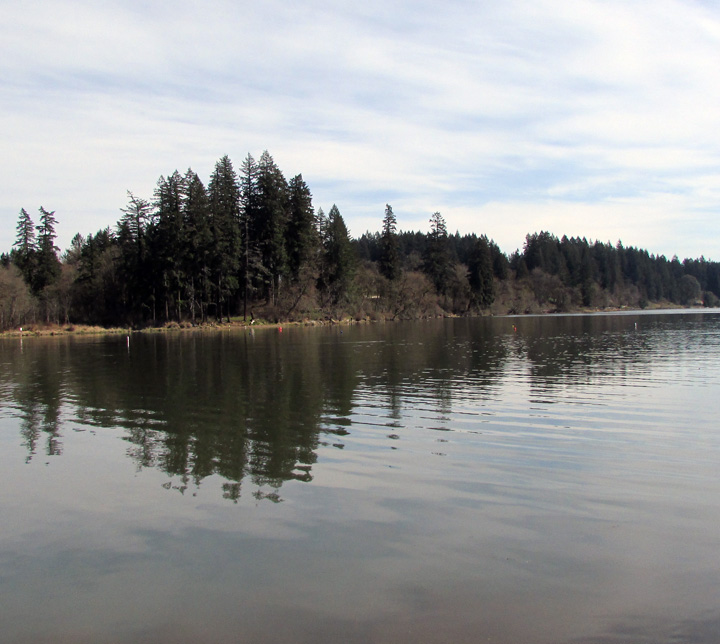
Kildeer
I had seen an article about local outdoor productions of various Shakespeare plays and decided to go see Love's Labour Lost at a pleasant site near the Columbia River. The article that drew my interest acclaimed this crew but did not provide a lot of details about the play. As it turned out it was a play based on the title mentioned above. There were several performers who I assume were supposed to be humorous but I couldn't see any thing worth a grin, let alone a guffaw, and there was not much audience response that would suggest I was being too critical. Then a hundred car freight train roared nearby so the play was put on hold until it passed. The biggest problem though, was that we could not hear the players. There were no mikes strategically located to project the voices into also strategically placed speakers. All of us were on our own to interpret what seemed more like mumbling than projection. I got bored of all this after about 45 minutes and packed up my kit and made for the exit which was jammed with like minded audience members all of us eager to go home and enjoy the rest of the evening.

Shkes1
One day I decided that I would go to a high end, amateur baseball game featuring our local Ridgefield Raptors. I went to a game a few years ago and it was played at a small but very nice arena with cheap beer and bratwurst on the menu. So I looked forward to attending another one. As I got near Ridgefield I realized that I was not certain as to where the ball field was and pulled over to consult my google maps app.
The results of that search were peculiar and in the end, pretty funny. Gmaps told me that the stadium was about 8 or so miles elsewhere making me wonder why the Raptors would abandon the local and quite nice venue that I had been to previously. But, I followed the trail provided by the app. It took me to where I had never seen a ball field despite the many trips I had taken in the general area. I thought there must be a field hidden from the main road and followed the directions my phone recited to me. Finally it said to turn left into an alley way behind some formulaic suburban stores. As I reached the nadir of this alley and with a dumpster in front of me my Gmaps app proudly announced that I had reached my destination. I ended up missing the game but thought that the Gmaps coders must have been watching me from a remote camera and were enjoying a laugh at my expense while they were sequestered into some sort of coder cave with little else to do.
In early September I headed east for an hour long drive to the town of Stevenson on the Columbia River. I love this drive and for much longer than the road to Stevenson but on this day I was headed to the Farmer's Market. The reason I did that was because I go to all of those that I possibly can and I hadn't been to this one before. Farmer's Markets are a lot like mini festivals and they occur regularly rather than annually. They also vary wildly in their entertainment and farm product efficacy. I mean by all that, that they are trendy during the last 15 or so years and so some of them exist merely as some sort of community showcase and maybe at the urging of some zealous selectman.
In early September a typical market would be lush with produce. Not so in this waterfront market. There were about 22 items of produce of varying levels of quality. I mean about 22 actual items rather than victual species. In sum there were 5 booths 4 of which hawked trinkets and arts and crafts oddities, one being a booth specializing pet stuff like food bowls. They were locally hand made and I imagine by someone who has a kiln in the garage and no requirement to bring in family income. The market was located on the Columbia River so had the ambiance that could offer much to a market. Here in Stevenson that did little to cheer up the puny market with booths manned by vendors who had all of the enthusiasm of kids during after school detention or their adult peers on a work release program or doing community service.

I walked around the village of Stevenson for a bit and saw an inviting Tavern which was closed since it was not even noon yet. I also saw a large river cruise ship which made a stop there in its tour of the Columbia River. I imagine that would be a nice trip for those who could afford it. That is a demographic that I don't meet the requirements for.

Stevenson is nestled in a branch of the Cascade Mountains so there is a lot of viewing (in addition to the Columbia) to keep anyone entertained.

So summer ended today. We had lots of hot weather and we mainly saw sun since we got far less rain than any of the years I have been here. That includes 2017 when we went a record number of days without rain. We did that again this year when we saw a total of .05 inches of rain from the first day of the season (there were plenty of dry days prior to the summer solstice too) but we did get some rain the last weekend of the season. So our total rainfall for this 282 season of my life was 2.17 inches.
During the summer the freedom loving patriots kept the pandemic alive by refusing to be vaccinated. The nation has been averaging 2000 deaths per day mainly from those whose rights would be violated by taking measures beneficial to their health.
We did not hear too many loud voices from these freedom fighters on a national scale. On September 18th there was a march on Washington by a group of less than 1000 who ostensibly were there to lend some sort of moral support to the people responsible for the violent nonsense of January 6th. Secondarily they were there to preach the lie that the orange president actually won the 2020 election. That he lost because of wide scale (absolutely unproven) voter fraud. The orange president still claims such when he has his minions confined to some arena or other public forum so that they can blindly adore him.
However the dismal results of the September 18th rally is a strong indicator that these zealots were rudderless and unable to follow a path of their own making. They have to wait for concrete instructions.
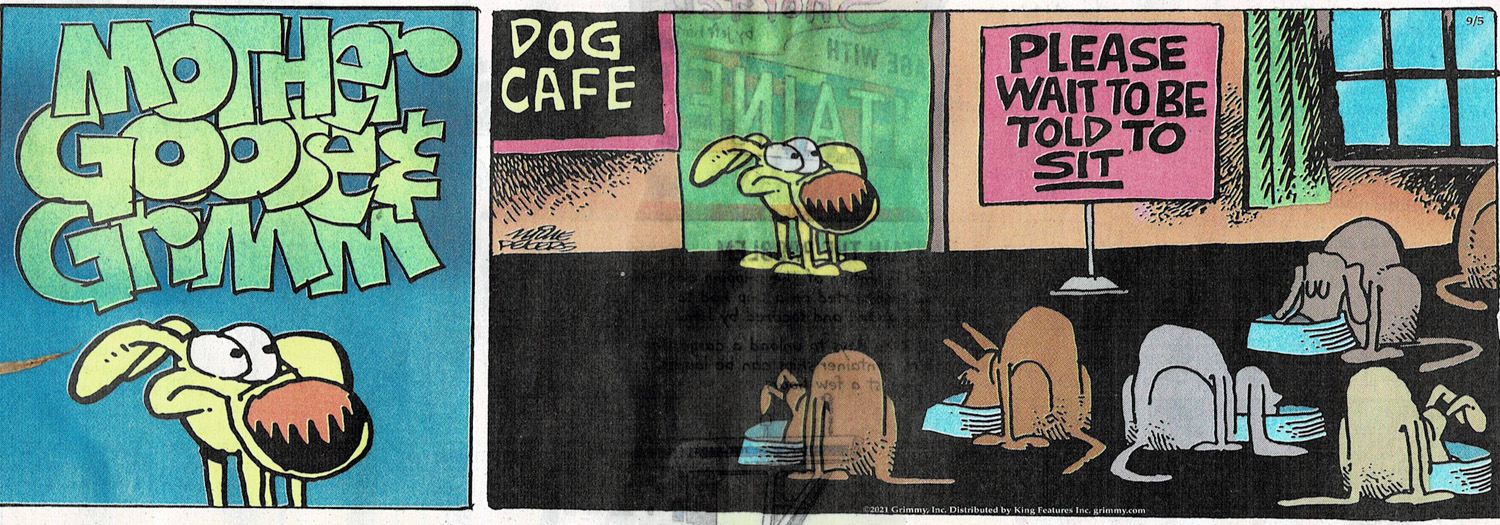
Republicans receiving their directions from the RNC
As I have been doing since our Covid sequestering in March of 2020, I saw a number of Zoom presentations. On July 19th PBS showed a preview and discussion of the Ken Burns, Muhammad Ali presentation aired on September 19th. The panelists included the Olympian Janet Evans who handed Ali the symbolic torch at the Olympics start several years ago. Evans won almost everything there was to win in swimming, including five Olympic medals.
August 4th Brooklyn Library Center for History. Had a discussion about early American Indian views of justice. The book, Covered With Night (meaning the description used for sorrow by native Americans, was the focal point of the discussion. The panelists were introduced by Marcia Ely and included the author of the above book, Nicole Eustace. Donald Grinde a historian and political activist, who can claim tribal membership, was the other panelist. The discussion included such details as the European sense of justice for native Americans, balanced gender roles in the tribes. According to the panelists, natives, as per to the European powers, had no souls so Europeans could treat them any way they like including to kill them. However those powers wanted peace with Indians in order to further their own agenda.
The Center for Information (CFI) presented Ed Rothschild who droned on about 1980 elections and rise of the religious right, Trump judgeship appointees and other (legitimate) gripes about Republican power. The presentation poorly done and I did not complete it.
September 2, also from CFI was Carolyn Porco of the Cassini Project, with a discussion entitled There is no Planet B.
With climate change running amok, big money oligarchs and politicians seek solutions in habitations of other planets. Porco scoffed at the lunacy of impractical solutions. Distance and costs alone, make this all pie in the sky and in fact disingenuous. It also glorifies those oligarchs like Musk and Bezos along with their space flights reflecting the glories of being super wealthy. This rather than explore real solutions and abatement to a an increasing global problem.
For our personal convenience, natural resources have borne the brunt. It is all for the ease and exploitation for now. There is no looking at the future. We've depleted “The Commons” (refering to a situation in which individuals with access to a shared resource (also called a commons) act in their own interest and, in doing so, ultimately deplete the resource. This economic theory was first conceptualized in 1833 by British writer William Forster Lloyd). Scientific and logical solutions are displaced by the futuristic dreams of the super wealthy. We should create a circular economy-one that recycles used resources into something else that is usable. She also described the numbers of satellites that orbit the earth and that there are no international agreements to regulate them. The results are that once the satellite is no longer functioning it does not have to be decommissioned. It becomes space debris and subject to satellite collisions and falling objects with more satellites.
On September 9th, The Center for Brooklyn History presented a short biography of Fannie Lou Hamer. I first heard of her many years ago when listening to a record my wife bought. I learned that she was a nearly illiterate sharecropper who became involved in the Civil Rights movement in the south during the 1960s. Panelists included Marcia Ley, the host, Kate Larsen author, Karen Hill and Cynthia Copeland. They did a reasonable presentation of Hammer's story and my only complaint was that one technique was to emotionalize the story.

The little bit of traveling that I did do during the summer was to King County where I intend to move to in January. So it included apartment hunting and visiting my daughters and grandson, Ali. It was from August 6th to 9th and will be re-done a few times prior to actually moving.
I got a room at the Red Lion in Des Moines, WA for Friday night with the intention of beginning an apartment hunt. Since both of my daughters are within about 10 miles of here, it seemed like the thing to do. The drive up from Vancouver is about 180 miles but is almost entirely a bleak trip. The scenery north of Olympia is pretty much all industrial or simply the bumper of the vehicle 60 feet in front of me.
So I checked out several apartment complexes. Of the seven I looked at only two were acceptable. One was too rich for me and another up a cascade of hills within the complex. It was hard enough maneuvering around in a car and most surely not pedestrian friendly. I'm hoping for a location that I may not find here, though there are still many complexes left to look at here in Des Moines and other nearby locales.
So when I exhausted Friday's search (or it exhausted me), I spent the night at the Red Lion Inn on the ultra busy Pacific Highway. Its one of those low to middle range motel situations that is clean and everything works. It was unexceptional. The street is not only very busy and high speed but it is filthy with litter which includes the packaging of the nearly 5 trillion fast food places that line this suburban mecca. It was very uninviting for anyone walking-at least those with sentiments near mine.
Along with the fast food joints there are many rather dreary Asian and Mexican restaurants which are privately owned. I skipped a normal dinner because the suburban industrial chains like TGIF just didn't interest me and the Italian ones too pricey for me to be eating in a motel room. Besides I was going to be visiting the next two days so it was prudent to save a few bucks for more celebratory times. For dinner on Friday night I went to the local grocery store and bough a prepackaged chicken Alfredo dinner and it was fine.
Des Moines itself is a curious meld of homeless and wealthy. Litter and trash line the non residential streets as if they are some sort of trademark brand of this condition. I imagine that there are about 100 places in every state in the union just like it.
There is a noticeable number of people whose life styles would be called middle class but their mortgages are far higher than any place I have ever lived.
There is a pleasant tract of coffee shops and restaurants that last two or three blocks along both sides of the street. There is also a waterfront area that makes for a nice walk along a bit of the Puget Sound. There is also a pretty nice state park only a few miles out of town.
Generally my first night in a motel provides me with a fretful sleep and I am usually content with about five hours of it. However this particular August Friday night I slept well even getting about 9 hours of sleep so I woke up content on Saturday morning.
So I finished off Friday night reading a Paul Dunbar melodrama. In the morning after a shower, I looked at more apartments and finally in the early afternoon my visiting began. At eleven, Lucie got hold of me and we met up in Georgetown for lunch. Our first choice-The Hangar, was closed for renovation but walking around the business district full of bistros and cafes, we landed at one whose name I didn't note, but we had a fine small repast in the shade of an outdoor deck. Once completed we did a fast tour of an art sale on the street and then headed separately down to Hannah's. My daughter's and Hannah's son Ali and I all went on a long walk to a park where Ali stayed busy climbing all over the equipment and commenting on whatever was occurring, commenting that is, as best as his skills allowed. So he got quite a workout.
The afternoon became evening in a very short order so Lucie headed back to her home while Hannah, Ali and I we dined on pizza and salad and by then it was night and Ali was retreated to the bedroom with his mother.
A half an hour later she emerged and we talked about what ails the American world and though I didn't look at the time I estimate that by about 10:30 we each went to bed.
Earlier in the day, upon passing one of those neighborhood free book libraries, Lucie saw one that she insisted that I read. An hour or so earlier, I had finished Dunbar's treacle, The Sport of the Gods so I was primed for a new read. So...taking Lucie's gift, I began reading Ann Patchett's Bel Canto while pre dozing on Saturday night.
I arose Sunday and snuck off to get a paper and while everyone else continued sleeping, began the crossword puzzles. When Hannah and Ali entered the scene we had some eggs (Hannah raises her own chickens) the eggs were quite fresh and we ate pita bread along with them. After putting the dishes aside we headed to the Farmer's Market in West Seattle. This required parking several blocks away and walking up hill to our quest. Because of Ali's age, size and curiosity about everything, this was a long task. But Ali was a trooper and when we finally got to the top of this hill Hannah bought a tray of fruits and Ali was fortified by the strawberries that he ate and was decorated by those that adorned his cheeks and clothing. He did however, become dissatisfied with this venture and we started the now down hill trek back to the car. His temper was appeased some by the stop we made midway back to get some much needed chocolate milk. We made it back to the car and headed to Des Moines with Hannah keeping Ali awake so that a more fruitful nap would come upon reaching her home. That was successful.

Once the nap was over Ali and I entertained each other for a few hours and then Lucie fetched me for a trip back to Georgetown and an hour of billiards.
It is said that you never forget how to ride a bike which seems to be true. You can however, forget how to play pool. Actually it is less “How to play” than execution of what is theoretically obvious. I seemed to still do my geometric calculations but only rarely converted that knowledge into making the billiard ball reactions do as I intended. Sometimes I did and for about two seconds, looked as if I knew what I was doing.
Then she, Eddie and I went to White Center for a meal of Cajun seafood steamed with corn and potatoes. This is a meal I never tire of. After the repast was over Lucie dropped me back at Hannah's where we visited in her expansive garden until dark. For my good behavior, Hannah rewarded me with some fresh garlic (my own attempt to grow garlic in my garden of pots having failed), and it was soon time for Ali to go to bed for the night.

Hannah's Fig Tree
Hannah and I completed the evening cleaning up and Hannah doing some food prep for the upcoming week. Once I had proffered all of the sagacity I could, it was the end of another day.
Then of course it was Monday and the visit complete. I entertained Ali as Hannah began her work day and Lucie relieved be. Then I headed south for my three hour drive to Vancouver.